ABS Pumps & Modules Repair

Common ABS & ESP faults. Professional testing. Practical repair route.

Freestorm provides testing and repair support for ABS pumps, ABS/ESP control modules and hydraulic units across a wide range of vehicle makes & models.

If your ABS or ESP warning light is on, the module shows no communication, or diagnostics indicate an internal fault, we can help assess the unit and manage the repair route where possible.

  • Braking-System Support

    ABS/ESP units affect essential braking functions

  • Tested Service

    The unit is assessed before repair is confirmed

  • Repair Where Possible

    A repair route may avoid unnecessary replacement

  • 2-3 Working Days

    Typical turnaround from receipt of the unit, depending on the fault and testing requirements

  • Technical Help

    Support with fault codes, part numbers and booking

What is an ABS Pump / Module?

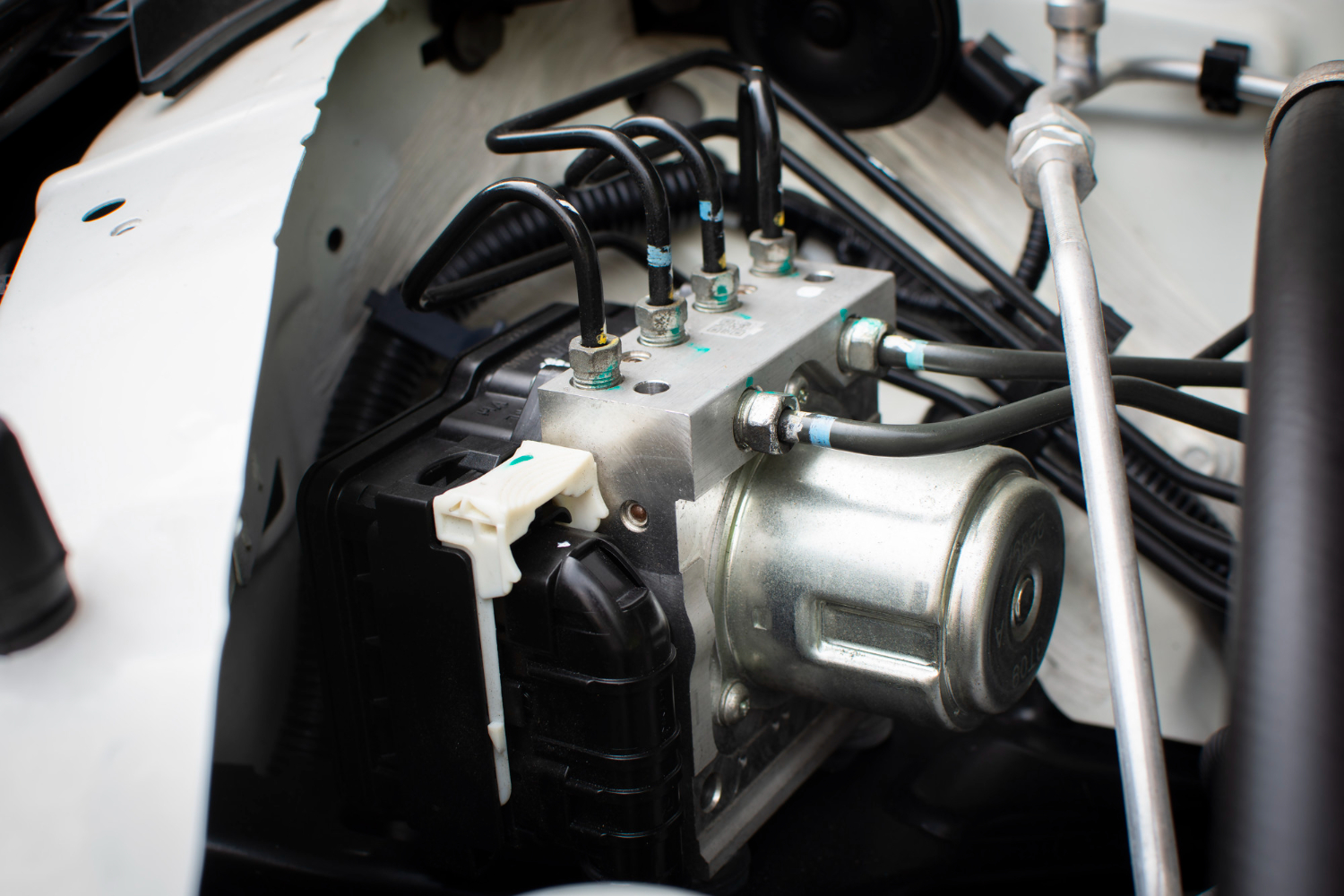
The ABS pump (also referred to as the ABS/ESP hydraulic unit or control module) manages braking pressure to individual wheels to prevent wheel lock-up and maintain vehicle stability.

It receives signals from wheel speed sensors, the brake pressure sensor and related components, and adjusts hydraulic pressure during braking or stability control events.

Because the ABS/ESP system is directly linked to vehicle braking and stability, warning lights, communication faults or internal faults should be assessed professionally.

Why an ABS fault should not be ignored

A faulty ABS pump or module can affect braking performance, traction control and stability assist. Depending on the fault, the vehicle may show a soft brake pedal, brake imbalance, or an ABS/ESP warning light that returns after clearing.

The warning light can also cause NCT / roadworthiness issues and should be investigated before further repairs are carried out.

Remanufacturing is more than repair

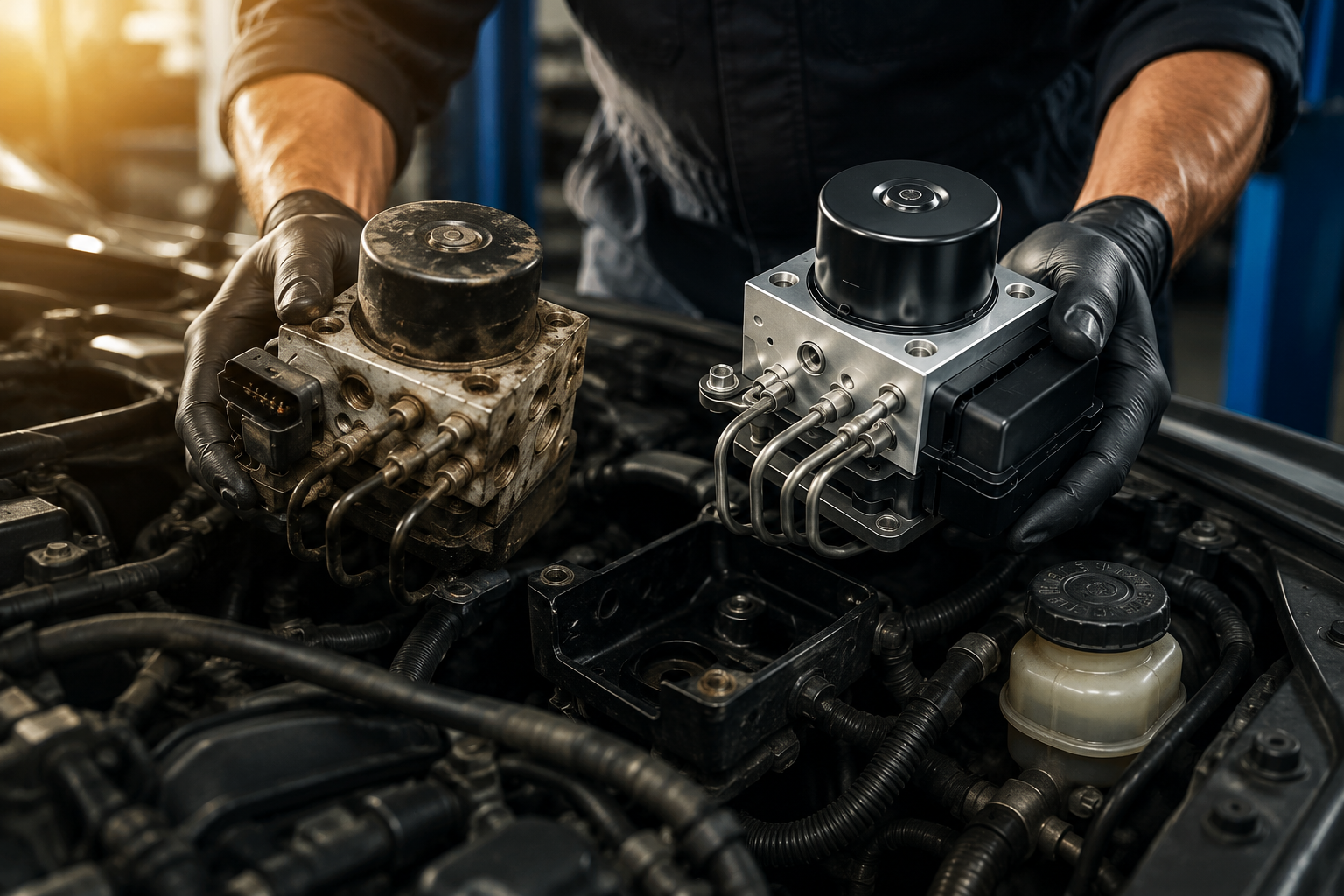
Remanufacturing is a structured industrial process that returns used parts (cores) to reliable working condition through inspection, replacement of worn parts, rebuilding and testing. A professionally remanufactured ABS unit is not simply a used part — it is a component restored to performance, reliability and value.


Repair / Remanufacture your own unit

Best when:

The original ABS pump/module can be tested and repaired.

Benefits:

  • Keeps the original unit from the vehicle
  • May avoid unnecessary coding
  • Can be more cost effective than a new unit
  • Helps preserve original vehicle configuration
  • Supports a more sustainable repair route
  • Typical turnaround: approximately 2–3 working days from receipt of the unit
Book ABS Repair

New / Remanufactured replacement unit

Best when:

The original module is severely damaged, corroded or cannot be repaired safely.

Benefits:

  • Faster replacement route where a tested unit is available
  • May require coding after fitting
  • Availability may vary
  • Core return may apply
Ask us before replacing

Repair is often the most practical first route, but it depends on the condition of the unit and the fault found during testing. If the module is too damaged to repair, we will advise on the next step.

Common ABS symptoms

These symptoms may be linked to the ABS pump, ABS module, hydraulic block, wheel speed sensors, wiring, brake pressure sensor or related braking components. Testing is required before confirming the repair route.

ABS / ESP warning light on

The ABS or ESP warning light stays illuminated on the dashboard or returns after clearing.

No communication with ABS module

Diagnostic equipment cannot communicate with the ABS/ESP control module.

Fault code will not clear

The same ABS/ESP fault code returns immediately after being cleared.

Traction control warning light

The traction control warning light appears on the dashboard.

Wheel speed sensor related faults

Signal or communication faults from one or more wheel speed sensors.

Pump motor faults

Internal pump motor failure can prevent correct hydraulic pressure control.

Common fault codes linked to ABS problems

Fault codes vary by manufacturer, model and diagnostic tool. The examples below are common references only and should not be treated as a final diagnosis without testing.

U0121 — Lost Communication With ABS Control Module

The vehicle cannot communicate with the ABS/ESP control module.

C1234 — Brake Pressure Sensor Circuit Fault

Commonly linked to hydraulic pressure sensor faults.

C0035 / C0040 — Wheel Speed Sensor Circuit Fault

Signal or communication faults from a wheel speed sensor.

C1095 / C1145 — ABS Pump Motor Circuit Fault

Internal pump motor faults within the ABS unit.

Common Faults We Can Help With

Internal module failure

Internal electronic failure can prevent the ABS module from communicating or operating correctly.

Fault code will not clear

The module may not respond to diagnostic equipment due to internal failure, power issues, damaged pins or network faults.

Pump motor faults

Internal motor failure can prevent correct hydraulic pressure control.

Wheel speed sensor related faults

Faulty signals from wheel speed sensors can trigger ABS/ESP faults.

Water / moisture damage

Moisture ingress can cause corrosion, short circuits or intermittent faults.

Power supply / voltage faults

Low voltage, jump starting or battery issues can trigger or contribute to ABS faults.

Connector / pin damage

Bent, damaged or corroded pins can prevent reliable communication with the ABS module.

What to do before sending your ABS unit

Before sending the unit, gather as much information as possible. This helps us confirm the correct repair route and avoid delays.

  • Vehicle make, model and year
  • Registration or VIN, if available
  • ABS pump / module part number
  • Photo of the unit label
  • Diagnostic fault codes
  • Description of symptoms
  • Whether the brake pedal feels soft or the brakes are binding
  • Whether the fault returns after clearing
  • Whether the fault returns after clearing

Will the ABS unit need coding?

In many cases, repairing the vehicle’s original ABS unit can help retain the original coding and vehicle configuration. This may avoid the coding often required when fitting a replacement module.

However, coding requirements depend on the vehicle, the fault, the module type and the repair carried out. We will advise where additional coding or diagnostic checks may be required after refitting.

Quality-led repair process

ABS units are directly linked to braking, so every repair route must be handled carefully.

  • Unit details checked before repair route is confirmed
  • Fault symptoms and diagnostic codes reviewed
  • Component-level testing / repair where possible
  • Repair availability depends on unit condition and fault type
  • Return with repair information where applicable
  • Support available after refitting

Typical turnaround

Typical repair route: 2-3 working days from receipt of unit.

Typical turnaround is approximately 2-3 working days from receipt of the unit, depending on the fault, testing requirements, repair complexity, parts availability and courier times.

We will keep you updated if additional time is required.

How the Service Works

  1. Book your repair

    Complete the booking form with your vehicle, part number and fault details.

  2. Send us your unit

    We confirm the next steps and provide delivery instructions. Pack the unit securely and include your booking details.

  3. Testing & Repair

    The unit is tested and repaired where possible.

  4. Return ready for refit

    Your unit is returned with the relevant repair information and warranty details where applicable.

Book ABS Repair

Suitable for many vehicle makes & models

Freestorm can help with ABS faults across many common vehicle makes and models.

  • Audi
  • BMW
  • Ford
  • Mercedes-Benz
  • Volkswagen
  • Peugeot
  • Chery
  • Toyota
  • Volvo
  • and more

Why choose Freestorm for ABS repair?

Braking-system understanding

ABS units are part of the braking system, so the repair route must be handled carefully and professionally.

Repair-first approach

Where suitable, repairing the original module can be more practical and cost-effective than replacing it with a new or used unit.

Help with diagnosis

We help review symptoms, fault codes, part numbers and vehicle details before confirming the next step.

Clear process

From booking to return delivery, Freestorm keeps the repair route simple and organised.

Frequently asked questions

How long does ABS repair take?

Typical turnaround is approximately 2–3 working days from receipt of the unit, depending on the fault and testing requirements.

Do I need to send the whole vehicle?

No — for most ABS repairs you send the ABS unit only.

Can you confirm if my unit is repairable before I send it?

We can often advise based on symptoms, fault codes and part numbers, but final confirmation may require testing.

Is the repair guaranteed?

Warranty terms depend on the part type and repair carried out. We will confirm the applicable warranty before or after the repair assessment.

What information should I provide?

Vehicle make, model, year, registration/VIN if available, part number, fault codes, symptoms and any diagnostic report.

Need help with an ABS fault?

Send us your vehicle details, part number, fault codes or symptoms and we will help identify whether ABS testing and repair is the right route.